Most patients never notice an oral cancer screening happens at a dental appointment because it does not feel like a separate procedure. A general dentist in Willow Knolls, IL, runs through it during a routine exam in just a few minutes, and the check covers far more than just the teeth.

Why Screening Changes Everything
The reason oral cancer screenings are built into routine dental exams rather than scheduled as separate visits comes down to timing. Oral cancers caught at an early, localized stage have dramatically better outcomes than those found at later stages.
According to the American Cancer Society’s survival data, the five-year relative survival rate for localized tongue cancer is 88%, compared to 39% for cases where the disease has already spread to distant sites.
The difference that stage makes in survival is precisely why a general dentist in Willow Knolls, IL, performs the check at every exam, not only when a patient mentions a symptom.
The Visual Inspection
The screening begins visually. The dentist examines the lips, the lining of the cheeks, the gums, the tongue on both its top and underside surfaces, the floor of the mouth, and the roof of the mouth. Each of these areas is inspected for color changes, unusual texture, white or red patches, sores that have not healed, and any swelling or thickening of the tissue.
Color is one of the most useful early indicators. Normal oral tissue is uniformly pink and moist. A persistent white patch, called leukoplakia, or a red patch, called erythroplakia, warrants a closer look because both can signal abnormal cell activity. A sore that has not resolved within two weeks is treated the same way.
What Palpation Adds to the Exam
After the visual inspection, the dentist palpates the tissue. This means using gloved hands to gently feel the floor of the mouth, the sides and underside of the tongue, and the neck and jaw area for any lumps, hardened areas, or asymmetries that might not be visible from the surface.
This step detects abnormalities that appear normal to the naked eye but feel different to a trained examiner. Combined with a dental cleaning and a full exam, palpation completes the picture of a patient’s oral health at each visit.
Symptoms Worth Mentioning Before the Exam
While the screening catches a great deal, patients can make it even more effective by mentioning any recent changes they have noticed. A few symptoms in particular are worth flagging:
- Persistent hoarseness or a sore throat lasting more than two weeks without an obvious explanation is worth mentioning.
- Difficulty swallowing, pain while chewing, or numbness anywhere in the mouth or lips should prompt a conversation with a dentist sooner rather than later. These symptoms can sometimes be addressed through an emergency exam if they come on suddenly.
- Unexplained bleeding in the mouth that is not from a recent injury or procedure is a signal that the dentist needs to evaluate.
- A feeling that something is caught in the throat, separate from a cold or allergy flare, can sometimes be an early symptom of oropharyngeal cancer. An oral cancer screening provides the dentist with a documented baseline for detecting any changes at the next visit.

Ask Your General Dentist in Willow Knolls, IL, About Your Next Screening
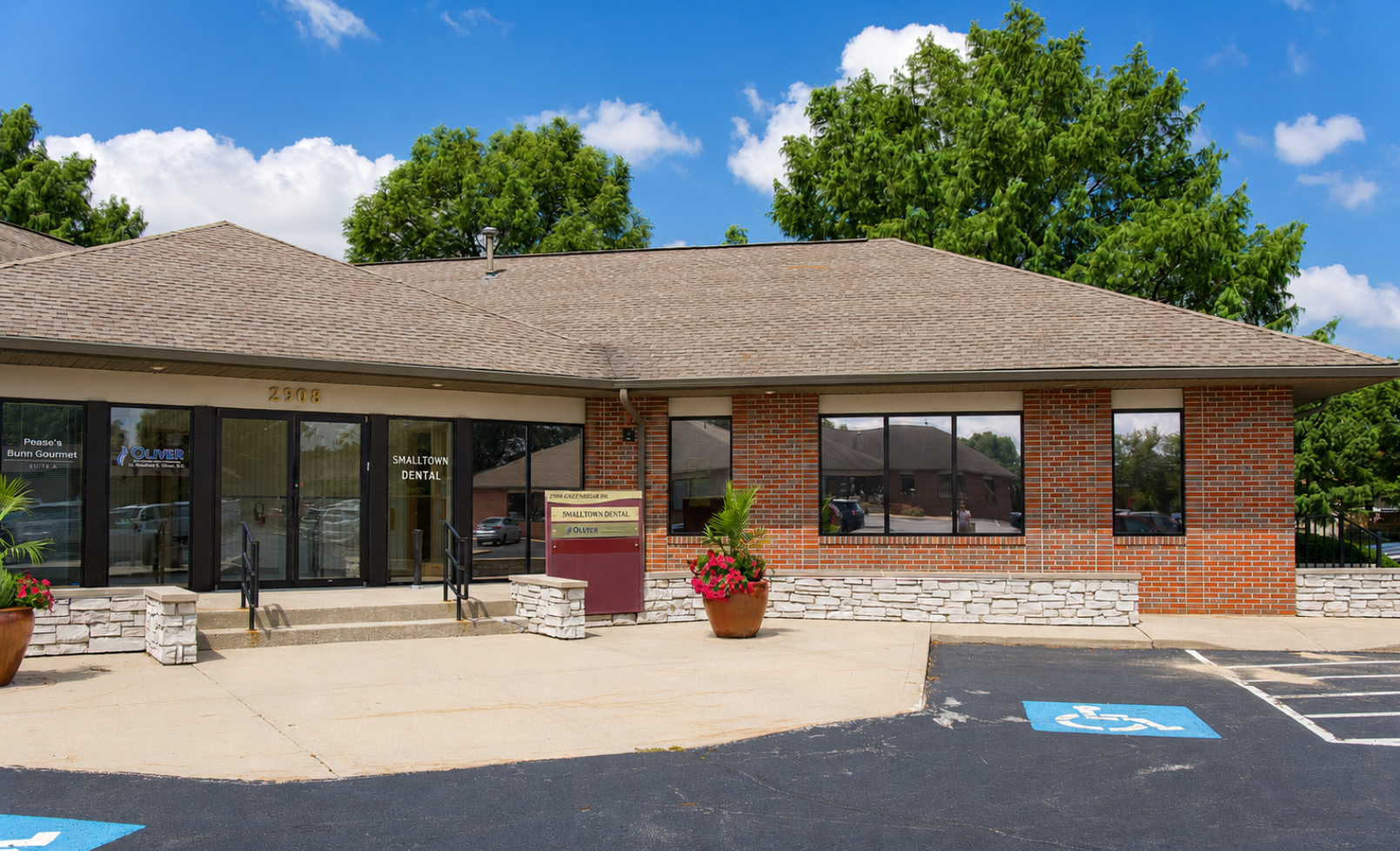
A general dentist in Willow Knolls, IL does more at every checkup than clean teeth and check for cavities. At Smalltown Dental, we include an oral cancer screening with every exam so that any abnormality is caught as early as possible.
Contact us today to schedule an appointment and let our team handle the check that could make a significant difference.


%25202026.png)